The meta in Overwatch 2 shifts faster than a Tracer blinking across the map. What worked last season might get completely shelved after a balance patch, and picking the wrong hero can cost you ranked games before the match even starts. Whether you’re climbing from gold or grinding for that Grandmaster card, understanding where heroes stand in the current tier list is crucial for making smart character selections. This guide breaks down the best heroes across all three roles, explains what makes them viable right now, and gives you the strategic framework to choose characters that’ll actually help you win.
Table of Contents
ToggleKey Takeaways
- An Overwatch character tier list is built on hard data like win rates and tournament performance, not personal preference, helping you make smarter ranked selections.
- S-tier heroes like Sigma, Lúcio, Widowmaker, and Mercy dominate the 2026 meta by offering consistent value and clear win conditions across all skill brackets.
- Role-based rankings matter more than overall tier lists since tanks, damage heroes, and supports fill completely different team needs and counter matchups.
- Patch 8.34 shifted the meta toward backline value and high-ground control, indirectly buffing positioning-focused heroes while nerfing dive-heavy playstyles.
- New players should start on flexible, beginner-friendly heroes like Mercy or Roadhog to focus on game sense, while advanced players should specialize in high-skill characters like Genji or Ana that reward mechanical mastery.
- Counter-picking and understanding matchups—knowing when Widowmaker destroys Pharah or when Ana shuts down Tracer—matters just as much as the Overwatch character tier list itself.
Understanding the Tier List Framework
How Tiers Are Determined
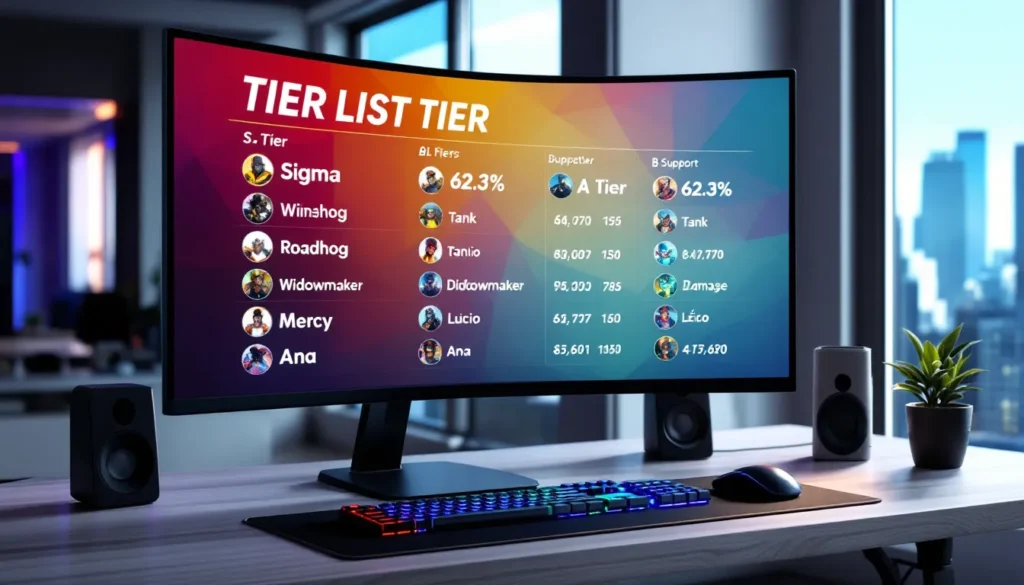
A solid tier list isn’t about personal preference or what looks coolest in the hero gallery. It’s built on hard data: win rates, pick rates, tournament performance, and how heroes perform across different skill brackets. S-tier heroes dominate their role, have consistent win rates above 50%, and offer clear value even in a coordinated enemy team. A-tier heroes are solid picks that perform well but might require better positioning or coordination to shine. B-tier and below heroes either struggle in the current meta, require niche playstyles, or have significant counterplay that limits their effectiveness.
The 2026 meta heavily favors heroes with high engagement potential and clear ultimate economy advantages. Map control matters more than ever, and heroes that can secure picks or force fights without feeding ultimate charge tend to rank higher.
Why Role-Based Rankings Matter
Overwatch is fundamentally a role-based game. A tier list that lumps all heroes together misses the point entirely. You can’t compare a Winston swap to a Widowmaker swap, they fill completely different needs on the team. Role-based rankings let you make smarter decisions: if you need a tank, you’re looking at which tanks work best. If your team needs a flex DPS, the damage tier list shows you exactly where that choice fits in the current patch.
Knowing role-specific tiers also helps with counter-picking. Some heroes counter entire roles: others specifically target individual characters. This breakdown gives you the context to make those reads in-game.
Tank Tier List: The Frontline Guardians
S-Tier Tanks
Sigma continues to dominate the tank role in 2026. His Kinetic Grasp provides unmatched defensive utility, his Accretion stun is a game-changer in team fights, and his ultimate Gravitic Flux forces enemy positioning or punishes tight formations. Sigma’s 350 HP barrier also gives teams consistent cover without relying on a separate shield tank. Win rates hover around 52-54% across mid-to-high ranks.
Roadhog remains an absolute threat in coordinated play and solo queue alike. A successful Hook into a combo kill removes threats instantly, and his self-heal keeps him relevant when teammates are split. The hero punishes positioning mistakes harder than almost any other character in Overwatch 2.
A-Tier Tanks
Reinhardt gets work done, especially in organized team play where his Hammer combos and Charge stun create guaranteed picks. His barrier provides consistent cover for healing, though he struggles into Sigma and ranged-heavy comps. Zarya sits here because her Bubbles require good timing and resource management, but they offer the best defensive value for supporting aggressive teammates.
D.Va is flexible and can threaten backlines, but her lack of barrier uptime and vulnerability to certain ultimates keep her from S-tier. Still, in the right hands, she’s absolutely pickable in ranked.
B-Tier and Below
Wrecking Ball requires a specific playstyle and team coordination that most ranked teams can’t provide. Hammond works as a niche pick into certain comps but isn’t worth spamming. Junker Queen offers interesting tools but falls short in consistent team fight value compared to S-tier options.
Damage Hero Tier List: Dealing Maximum Pressure
S-Tier Damage Heroes
Widowmaker deserves her spot. High-ground control and one-shot potential completely change how enemy teams move. A skilled Widow player forces the enemy to respect positioning and limits enemy dps effectiveness. The Widowmaker Overwatch 2 guide breaks down her nuances, but the core strength remains: consistent value with low resource cost.
Tracer is always relevant in Overwatch. Her mobility, burst damage, and ability to chase down out-of-position targets make her a safety valve for winning team fights. She does require more mechanical skill than some heroes, but the payoff is immediate damage and map control.
Genji ranks high in this meta thanks to wall-climb mobility and his Dragonblade ultimate being an instant team fight win condition. Players who invest in Genji mechanics see outsized rewards.
A-Tier Damage Heroes
Ashe provides consistent ranged damage and Coach Gun repositioning that creates picks or escapes. Her ultimate, B.O.B., adds pressure and can be used for poke damage or dives. The Overwatch Cowgirl Ashe guide covers her playstyle in depth, but she’s solid across ranks.
Junkrat excels in close-quarters map control and can spam damage that forces enemy positioning. His mine is underrated for zoning and follow-up damage. Pharah remains viable for securing high-ground positions, especially when enemy hitscans are weak.
B-Tier and Below
Symmetra and Bastion require very specific teamwork and positioning to output consistent value. They’re not inherently bad, but the meta doesn’t favor their playstyle. Torbjörn struggles into dive-heavy comps and requires teammates to respect turret positioning, something that doesn’t happen consistently in ladder play.
Support Tier List: Healing and Utility Masters
S-Tier Support Heroes
Lúcio is probably the best support in 2026. Speed boost changes entire team fight dynamics, his ultimate provides safety in group fights, and he scales beautifully with team coordination. Good Lúcio players enable aggressive plays that other supports can’t match.
Mercy belongs in S-tier because she offers the highest raw healing output and Damage Boost is criminally undervalued. Her ult resets positioning and forces enemies to react. One-tricking Mercy straight to Grandmaster is absolutely viable because her kit is that clean.
Ana rounds out the S-tier with her Sleep Dart shutdown potential, high-skill-cap Hitscan healing, and ultimate that sets up guaranteed team fight wins. She requires aim skill, but the value is there.
A-Tier Support Heroes
Zenyatta provides Discord Orb utility that amplifies team damage and enables burst plays. His damage output is respectable too. Kiriko offers teleport positioning that some teams struggle against, plus invulnerability frames on her ultimate.
Moira heals consistently and her Fade provides get-out-of-jail-free mobility. She lacks the ceiling of S-tier supports but won’t throw games through mechanical mistakes.
B-Tier and Below
Brigitte and Baptiste require very specific teamwork to shine. They’re not weak, but they don’t enable as much as S-tier options. Brigitte especially suffers when teams can’t coordinate stun followups.
Meta Shifts and Current Patch Updates
Recent Balance Changes
Patch 8.34 (February 2026) made significant changes to sustainability in team fights. Sigma’s barrier size increased by 5%, and Lúcio’s speed boost radius expanded slightly, favoring mobile heroes. Widowmaker’s charge time decreased marginally, rewarding better positioning. Mercy’s healing was nerfed by 2%, though she’s still S-tier.
Damage hero nerfs touched Tracer (health reduced from 150 to 140) and Junkrat (mine damage decreased), making high-ground control more important. Support buffs went to Ana (Sleep Dart cooldown reduced) and Zenyatta (Discord Orb damage amp increased from 25% to 30%).
Impact on Hero Viability
These changes shifted the meta slightly toward backline value and positioning. Deathball compositions (grouped heroes ulting together) still work, but spacing and high-ground control now win more fights. Heroes who struggled before the patch, like Pharah and Ashe, got indirect buffs because the meta became slightly less dive-heavy.
Tournament play reflects this shift. Professional tier lists at Twinfinite and esports analysis on Game8 show pros favoring the same S-tier heroes but with slightly different flex picks in A-tier depending on the tournament meta. If you’re grinding ranked, mirror what works in pro play, it’s the best indicator of what’ll get wins.
Choosing the Right Hero for Your Playstyle
Beginner-Friendly Options
New players should gravitate toward heroes with straightforward kits and high value output. Mercy is the obvious support choice because healing is simple, aim at teammates and hold left-click. Her positioning matters, but mechanics don’t. Roadhog is beginner-friendly for tanks: hook someone, shoot them, repeat. Ashe offers simple shooting mechanics without requiring perfect positioning.
These heroes let you focus on game sense, map control, team fights, economy, instead of grinding mechanics.
Advanced Mechanical Heroes
If you’ve got hundreds of hours in Overwatch, characters like Genji, Tracer, Ana, and Widowmaker reward optimization and micro-management. Widowmaker players who master positioning and flick shots dictate matches. Genji combos at high speed require muscle memory, but mastery leads to consistent value.
Ana is the support for players who want to carry through pure skill. Her hitscan healing, Sleep Darts, and ultimate all reward better decision-making and aim than other supports. Loadout guides on The Loadout break down character-specific mechanics for those wanting to grind specific heroes.
Climbing Ranked: Hero Selection Strategy
Flexible Heroes That Work Across Ranks
Don’t one-trick in early ranked seasons unless you want to hard-cap your climb. Sigma works in every rank and against every composition. Lúcio enables your team regardless of what they’re playing. Ashe and Mercy are stable picks that provide consistent value without requiring perfect teamwork.
Spend your first 50 games learning role fundamentals on flexible heroes. Once you hit a rank where teammates actually group up, specialize into heroes that reward coordination. This progressive approach prevents you from getting stuck because your one-trick doesn’t work against the meta at your rank.
Counters and Matchup Awareness
Understanding matchups matters more than picking the “best” hero. Widowmaker destroys Pharah, but struggles into Winston. Roadhog counters backline squishies but feeds ultimate charge to Zarya. Tracer dives Widowmaker easily but gets run down by Brigitte.
Consider what the enemy locked first. If they picked Winston, Widowmaker is an instant answer. If the enemy ran Tracer, Ana or Brigitte shut her down. Good hero selection is just as much about countering as it is about your mechanical skill. Keep track of what your rank struggles against and become the counter-pick that your team needs.
The Overwatch tier list at Splashworkanimations offers more granular matchup data and explains why specific heroes work into specific enemy compositions.
Conclusion
Overwatch 2’s meta in 2026 rewards heroes with clean kits, reliable value, and clear win conditions. S-tier picks like Sigma, Lúcio, Widowmaker, and Mercy dominate because they excel in current balance and enable their teammates to win fights. That said, the tier list isn’t permission to ignore lower-tier heroes entirely, any hero can work if you play around their strengths and minimize their weaknesses.
Your rank, playstyle, and team composition should guide your selections. If you’re grinding solo queue, pick flexible heroes that don’t rely on team coordination. If you’ve got a stack, specialize into heroes that synergize with your team’s composition. The tier list is a tool, not a law. But it shows what the Overwatch 2 community has learned through millions of matches, patches, and competitive tournaments, and that knowledge is worth using to sharpen your hero pool and climb faster.