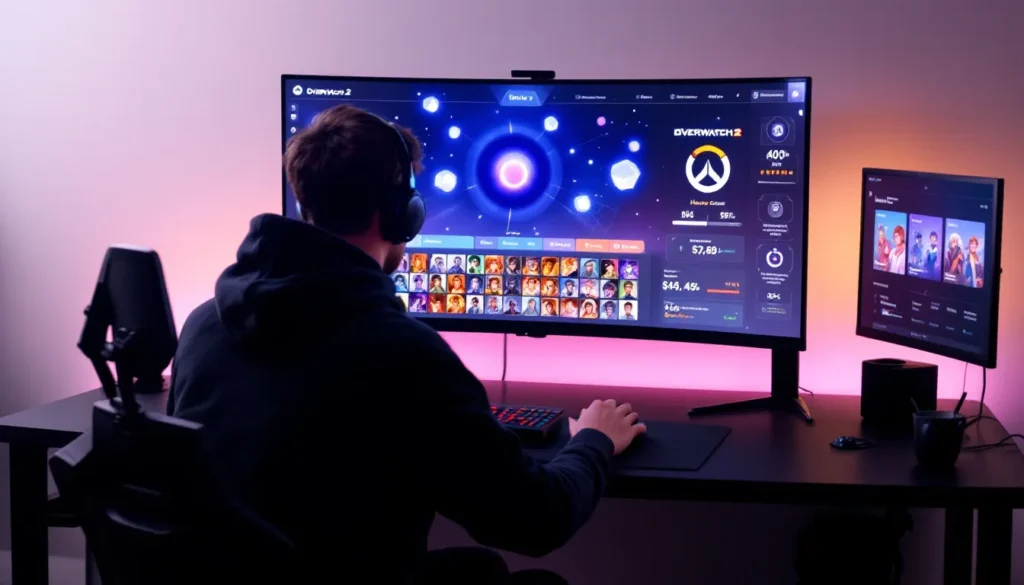
Staring at the hero select screen, paralyzed by 40+ choices, isn’t the vibe when you’ve got 30 seconds to lock in. Whether you’re tired of maining the same three heroes or just want to shake up your gameplay, an Overwatch character generator can strip away the decision paralysis and throw you into the deep end with a random hero. These tools, sometimes called an overwatch random hero picker, overwatch randomizer, or overwatch hero picker, have quietly become a staple for players who want to break their habits and expand their pool. In 2026, as Overwatch 2 continues to evolve with new heroes and shifting metas, using a random hero generator isn’t just a gimmick. It’s a legitimate way to stress-test your game sense, discover heroes you’d never pick on your own, and honestly? It makes climbing far more entertaining. This guide walks you through what these tools do, why they’re worth using, and how to leverage them whether you’re grinding ranked or just having fun.
Table of Contents
ToggleKey Takeaways
- An Overwatch character generator eliminates decision paralysis by randomly selecting heroes, forcing players to adapt and break out of narrow hero pools.
- Using a random hero picker strengthens game sense and versatility by exposing players to different heroes’ positioning, mechanics, and ult economy without the friction of deliberate selection.
- The best Overwatch randomizers offer customization features like role filtering and hero exclusion, allowing players to tailor randomization to their training goals and preferences.
- Random hero generators should be used for off-hours practice in quick play and casual modes, not during competitive ranked matches, to balance skill development with team responsibility.
- Content creators leverage random character generator challenges to create engaging, unpredictable streams where viewer participation and inherent narrative tension drive higher engagement.
- Flexibility across multiple heroes has become increasingly valuable in competitive play, making randomization tools essential for mid-to-high rank players who need adaptability beyond one-trick mastery.
What Is An Overwatch Character Generator?
An Overwatch character generator is a simple tool that does one thing well: picks a random hero for you. Instead of manually selecting from the roster, you input your preferences (or none at all), hit a button, and the tool spits out a hero name. Some versions are super minimal, just a spinner or button that cycles through the roster. Others are more elaborate, letting you exclude heroes you hate, filter by role, or set conditions like “only DPS,” “only supports,” or “only newer heroes.” The concept isn’t revolutionary, but it’s effective. You’re essentially handing over the reins to RNG (random number generation) and forcing yourself to play whatever pops up.
These tools come in many flavors. Some are browser-based web apps you can fire up instantly. Others are Discord bots that teammates can ping during hero select to randomize your pick. A few even integrate with streaming platforms, letting your audience control which hero you play, perfect for content creators who want to amp up the chaos factor. The core mechanic stays the same, though: eliminate choice, embrace randomness, and adapt your play around whatever hero the tool hands you.
How Random Character Generators Work
Under the hood, these tools are straightforward. They pull from Overwatch’s hero roster, which in 2026 includes heroes across three roles: tank, damage, and support. The generator assigns each hero a value and uses a random algorithm to pick one. The simplest versions have zero filters: they’ll hand you Reinhardt one game and Zenyatta the next, regardless of team composition or your skill level with that hero. The smarter generators let you customize the experience. You can exclude heroes, select specific roles, or even remove heroes that are currently disabled (which happens periodically in competitive play). Some advanced versions track your hero statistics and avoid suggesting heroes you’ve performed poorly on, though this defeats the “forcing yourself to adapt” aspect that makes generators fun in the first place.
The beauty of randomizers lies in their simplicity. They don’t require fancy backend infrastructure or real-time game data. Most run entirely client-side, meaning no lag, no loading screens, and no server dependency. You could literally use a random name picker from a basic website and achieve the same result by matching hero names to numbers. The best generators, though, add polish: clean UI, fast selection, and the ability to save settings so you’re not reconfiguring every time.
Why Use A Character Generator For Overwatch?
At first glance, voluntarily limiting your hero pool sounds backwards. Overwatch is a game about flexibility and swapping heroes mid-match to counter the enemy team. But forcing yourself to play random heroes, or at least, a pre-rolled hero at the start of a match, is one of the strongest training tools available. It’s not about gimping yourself. It’s about discovering blindspots in your gameplay and building muscle memory on heroes you’d normally avoid.
Many players get comfortable with a narrow hero pool. A tank main might only play Reinhardt and Sigma. A support player might skip Moira and Illari entirely. This works until you hit a rank where enemy teams actively counter your mains, or your team needs something you haven’t practiced. Suddenly, you’re forced to play a hero with weak aim or positioning sense, and you lose. A random hero generator forces this scenario deliberately, in a low-stakes environment where failure is expected and learning is the goal.
Breaking Out Of Your Comfort Zone
There’s genuine value in playing heroes outside your main roles. A Tracer player who spends time on Zenyatta develops a completely different understanding of positioning and resource management. A Roadhog player forced onto Kiriko learns how to provide value without being a kill-focused brawler. Each hero teaches you something about Overwatch’s mechanics that your mains might not. The random hero generator removes the friction of “deciding” to try something new. You don’t have to overcome the mental resistance of picking a hero you’re bad at, the tool decided for you, so you’re playing it.
This mindset shift is powerful. Players report that once they start using a randomizer, they stop asking “Can I play this hero?” and start asking “How do I play this hero well?” That’s growth. Over time, expanding your hero pool means you’re a more valuable teammate, you adapt faster to patches and meta shifts, and you’re harder to counter. You’re also way less predictable, which has subtle ranking benefits. An enemy team that doesn’t know your hero pool can’t pre-counter you the way they would if you one-tricked.
Improving Versatility And Game Sense
Game sense, understanding positioning, ult economy, team fights, and macro strategy, doesn’t exist in a vacuum. It’s tied to your hero. Reinhardt’s game sense is about frontline positioning and shield timing. Tracer’s is about harassment and escape routes. But the fundamental concepts of when to engage, how to support your team, and how to read the enemy’s intentions? Those transfer across heroes. Playing randomly forces you to apply those universal concepts to heroes with completely different mechanical requirements.
You’ll notice your tracer aiming improving because you’re now leading shots on less hitscan-heavy heroes. You’ll understand ult cycling better because you’re managing the ultimate ability of six different heroes every week. Your positioning sense becomes more robust because you can’t rely on your main’s movement tools to bail you out. These improvements compound. A player who spent a month using a random hero generator will outmatch someone with the same rank but a 3-hero pool.
Adding Fun And Challenge To Casual Play
Not everyone cares about ranking up or grinding competitive. For casual players, random hero generators are pure entertainment. Imagine queueing for a quick play or arcade match knowing you have no idea what hero you’ll get. There’s tension, surprise, and the occasional hilarious mismatch (like rolling Widowmaker when your team needs a tank). This unpredictability makes pub games feel fresher, especially if you’ve logged thousands of hours and the routine feels stale.
Streamers and content creators have caught onto this too. “Random hero challenge” streams are popular precisely because they create narrative tension. Viewers don’t know what hero’s coming next, so every game feels different. If you’re grinding the same ladder over and over, swapping to a randomized hero can breathe new life into your experience. You’re not trying to optimize every game: you’re just playing to discover, to have fun, and to see what you can pull off.
Top Free Overwatch Character Generators Available Online
There are several solid options available, and most are completely free. Here are some of the most popular:
OW-Randomizer: A straightforward web app that lets you pick a role or go fully random. It’s minimal, fast, and works on mobile. No account required.
Overwatch Hero Randomizer on Reddit: Community-built tools often pop up on r/Overwatch. These range from janky to surprisingly functional. Check the subreddit’s sidebar for pinned resources.
Discord Bots: Several Discord bots can randomize heroes. Popular ones include those built by community developers. Search “Overwatch randomizer bot” in the Discord Bot List, and you’ll find multiple options. These are great if you want to randomize heroes for your entire team or five-stack.
Tierlist Generators: Sites like that focused on Overwatch Tierlist occasionally feature randomization functions alongside their ranking tools.
Spreadsheet-Based: Some players use simple Google Sheets with random selection formulas. It’s DIY, but it works if you want full control over the hero list.
Most of these are free because they’re labor-of-love projects or hobby tools. They don’t require API access to Overwatch’s servers (the hero list is static), so there’s no cost to host them. Quality varies, but you’ll find something that fits your workflow. If you want something with more features, like role filtering, hero exclusions, or win rate tracking, you might need to dig into Discord bots or community-made web apps.
When choosing a generator, check these criteria: Does it work on your primary device (phone, PC, tablet)? Can you customize it (exclude heroes, pick roles)? Is it actively maintained? If it hasn’t been updated since Overwatch 2’s release in 2022, it might be missing newer heroes like Junker Queen or Lifeweaver.
Features To Look For In A Character Generator
Not all character generators are created equal. Here’s what separates a good tool from a mediocre one:
Customization And Filter Options
The best generators let you customize your experience. At minimum, you should be able to:
- Exclude specific heroes: Maybe you hate playing Mei or you’re terrible on Hanzo. A good generator lets you blacklist heroes so they never come up.
- Filter by role: Sometimes you want to force yourself to play DPS only, or just supports. Role filtering saves time and prevents “I didn’t queue for tank but the randomizer gave me one” frustration.
- Patch awareness: Hero viability changes with patches. A generator that reflects current patch hero availability is more useful than one using an outdated roster. As of 2026, make sure it includes all current heroes.
- Multiple randomizations: Some tools let you generate five heroes at once, letting you pick which one to play. This is less “forcing yourself” and more “picking from a curated list,” but it’s useful for team compositions.
These customization options separate tools that are fun from tools that are actually useful for skill development. A generator that forces you to play a hero you physically cannot (maybe you only have a controller and can’t play Widowmaker), isn’t helping anyone.
Role-Specific Selection
Overwatch’s role system, tank, damage, support, is fundamental to team composition. A generator that understands roles is more flexible. Here’s why this matters: You might queue for role lock in competitive, so a tank player can’t be handed a DPS hero. Or you’re practicing support but want to stay within that role. A role-specific randomizer adapts to your training goals. It’s the difference between “pick a random hero” and “pick a random hero that fits how I’m queuing today.”
Advanced generators might even consider current meta or win rates. Some Discord bots pull real-time data from sites like Mobalytics or OWL statistics, ensuring you’re mostly randomizing heroes that are actually viable at your rank. This is useful if you don’t want to waste time learning an 18% win rate hero, though it does undercut the “embrace randomness” philosophy.
How To Use A Random Character Generator Effectively
Having a tool is one thing. Using it strategically is another. Here are proven approaches:
Setting Personal Challenges And Goals
Random doesn’t have to mean aimless. Define what success looks like before you queue. Are you trying to:
- Get one elim per life? Set a mechanical target.
- Play 10 games on each hero? Build comprehensive experience.
- Maintain a 50% win rate on randomized picks? Create accountability.
- Master one new hero per week? Pair randomization with deep learning.
Players who combine randomization with specific goals see faster improvement than those who just queue and hope. The randomizer handles hero selection: you handle intention. This combo is potent because you’re not wasting mental energy on “what should I play” while also not leaving skill development to chance.
For competitive players, consider running randomization only in certain scenarios. Maybe you randomize your DPS pick but lock in your main tank to stabilize team composition. Or you randomize during off-peak hours when there’s less rank pressure. This balances growth (randomization) with responsibility (not trolling your ranked climbs).
Integrating Generators Into Team Play
Using a randomizer in a five-stack or organized team is different from solo queue. In a premade group, randomization becomes a bonding activity. Your five-stack can randomize heroes together, creating chaotic but memorable matches. Communication becomes key, if you’re randomizing, tell your teammates so they can adjust.
Some teams do “random night” where everyone uses generators for pure fun. The vibe is low-stress, learning-focused, and hilarious when weird comps form. A full enemy team of randomized heroes will be less coordinated than a stacked team, so use this for casual play, not climbing.
For duo or trio queues, randomize your position to ensure flexibility. If you’re queuing as a tank-DPS duo, let the generator pick your DPS while your partner plays around it. This prevents both of you from being forced into unfamiliar heroes simultaneously.
Using Generators For Skill Development
The most effective use of a randomizer is deliberate practice. Pick three heroes you avoid, add them to your exclusive hero pool in the generator, and run 50 games on cycle. Focus entirely on learning their mechanics, not winning. Win rate doesn’t matter. Understanding Widowmaker’s scope sensitivity, Zenyatta’s positioning needs, or Reinhardt’s earthshatter timing, that’s the win.
You can track your stats per hero using Overwatch’s built-in career profile or third-party sites like The Loadout, which aggregates performance data. Watch your eliminations, deaths, and ultimate economy improve as you practice. The feedback loop is immediate and motivating.
Pair randomization with VOD review. After a rough game on a random hero, spend 10 minutes watching the replay. What positioning mistakes did you make? Did you ult at the right time? A randomizer + vod review combo is how serious players expand their hero pool in weeks instead of months.
Random Character Generators For Content Creators
Streamers and YouTube content creators have embraced random hero challenges as a format. There’s a reason: it creates compelling content. Every game is unpredictable. Viewers don’t know what hero’s coming, so there’s inherent suspense.
If you’re a content creator, here’s how to leverage randomization:
Set rules that create narrative. “Random hero challenge, but if I lose I take a shot” or “Random hero, but I have to get a pentakill or the run ends.” Rules create stakes and keep viewers engaged.
Randomize for your audience. Let chat pick the hero or spin a wheel during the stream. Viewer participation drives engagement. Sites like Dexerto often feature creator challenges, so there’s precedent and audience appetite for this content.
Pair randomization with teammate chaos. Have your five-stack all randomize heroes. The comedy writes itself. Discord channels will explode when your Rein is matched with your friend’s Widowmaker.
Track performance across formats. Use the randomizer for a week, then compare stats to your main-based content. Did randomization hurt your view count? Improve viewer interaction? Data from your own streams is valuable.
Streamers on platforms like Twitch or YouTube have discovered that random hero content performs well because it’s inherently interactive. You can’t coast on muscle memory when you’re randomizing. Every game requires adaptation, and that keeps viewers entertained. If you’re looking to branch out from single-hero content, a random hero generator is a proven way to refresh your channel.
The Impact On Competitive And Casual Gaming
Random hero generators have quietly shaped how players approach Overwatch in 2026, and the effects span both competitive and casual spaces.
In competitive play, randomization is controversial. Hardcore climbers view it as a handicap. One-tricking a hero and mastering it deeply is still viable, ask OWL professionals who specialize in specific heroes. But the meta at mid-to-high ranks increasingly rewards flexibility. A player who can flex between three DPS heroes, two tanks, and a support is more valuable than a one-trick, even if they’re slightly less mechanically sharp on each individual hero. This shift has made randomization tools genuinely useful for competitive players. You can’t rely on pure hero mastery anymore: you need adaptability.
That said, using a random hero picker in your actual competitive matches is generally considered poor form. You’re gambling with your team’s result, and in ranked, that’s inconsiderate. The ethical use of randomizers in competitive is off-hours practice, using them in quick play or custom games to build hero pools, then applying that knowledge in ranked with intentional picks.
In casual play, randomizers are pure upside. Quick play, arcade, and custom games have no stakes. Randomization adds novelty without consequences. Players report higher engagement and fun when they use randomizers because there’s no pressure. You’re playing to discover, not to climb, so failing is part of the learning curve.
Developers haven’t officially integrated randomization into Overwatch 2’s UI, which suggests Blizzard sees it as a community tool rather than a core feature. But, the fact that robust third-party tools exist and thrive shows there’s demand. It’s entirely possible future Overwatch titles include built-in randomization features, similar to how games like Dota 2 have “all random” modes.
The broader impact? Random hero generators have legitimized hero flexibility as a skill. They’ve given players a structured way to practice it. And they’ve created an entire subgenre of content and challenge formats. Whether you’re climbing ranked, making videos, or just trying to freshen up a tired main pool, the overwatch hero randomizer has become a standard tool in the modern Overwatch player’s toolkit.
Conclusion
Random Overwatch character generators aren’t magic bullets. They won’t instantly make you a better player or guaranty rank gains. What they do is remove decision friction, force you out of comfort zones, and create a structured way to expand your hero pool. Whether you’re using a simple overwatch picker to shake up casual play or diving into an overwatch random hero generator for deliberate skill development, the mechanism is the same: let RNG decide, and adapt.
The best time to start using a randomizer is now. Your hero pool will improve. Your game sense will deepen. And honestly, you’ll have more fun rediscovering Overwatch through heroes you’ve been avoiding. The meta shifts, patches land, and balance changes come and go, but a flexible player who can pilot any hero competently will always have a seat at the table.
Pick a generator that fits your workflow (browser, Discord bot, spreadsheet, doesn’t matter), set some intentions for what you want to learn, and queue up. The randomizer will handle the rest.